
| Tasty byte-size provocations to refuel your thinking! | Brought to you by:  |
Musical Sounds in Tanzanian Swahili Letters: Expanding Horizons of Musicology
In my contribution to this Musicological Brainfood issue, I would like to make a few remarks concerning how music and sounds that we encounter in Tanzanian Swahili literary texts might expand our musicological horizons. To make these remarks, I take it to be self-evident that musicology, as we know it, has to be “provincialized,” to borrow a concept from Dipesh Chakrabarty,1 by acknowledging its Eurocentric or Western-centric locus and working towards “moving the centre from its location in Europe [and North America] towards a pluralism of centres, themselves being equally legitimate locations of human imagination,” to use Ngugi wa Thiong’o’s formulation.2 I read previous Brainfood posts as efforts toward this pluralization of geographical and epistemological centers of musicological horizons. The present post is my own way of contributing to these efforts. Specifically, I pay attention to the musical and sound practices in Tanzanian Swahili literature, and I explore how they are related to or reflect Tanzania’s past and present socio-cultural conditions and historical events. I also explore how they describe people’s subjective lived experiences of musical sounds that orchestrate their lives in the imaginary worlds of the texts and in the “real” historical world that the texts represent.
The literary turn in musicology has gained increasing momentum over the last few decades. To be sure, a number of studies have explored the use and the significance of music in the work of French fiction writers of the thirteenth and fifteenth centuries3 and in the work of modern French writers such as Proust and Mallarmé.4 There are also studies that explore the use of music in the work of English authors such as George Eliot, Jane Austin, and Iris Murdoch,5 in the works of modern Irish writers such as W. B. Yeats, J. M. Synge, Bernard Shaw, James Joyce, and Samuel Beckett,6 as well as in the poems of American poet Wallace Stevens.7 One can also find a handful of studies that focus on music in African literature.8 In addition, more books on the subject are being published in a series Palgrave Studies in Music and Literature. With the exception of very few studies, however, most of these contributions focus on Western literature.
My intervention in this post and in my ongoing research involves exploring musical or sonic aspects in Tanzanian Swahili literary texts. It examines ways in which these texts represent, evoke, and imaginatively re/create musical and sound practices in relation to people’s social identities, anti-imperial and decolonial struggles, and everyday experiences. Hence, in what follows I put forward three theses to show why Tanzanian Swahili literary texts, especially those in which music and sound play a vital role, matter in our efforts to expand the horizons of musicology.
Thesis 1: Reflecting Past and Present Musical Sounds and Tanzanian Social Worlds
Tanzanian Swahili literary texts offer insights into past and present musical sound practices in various communities in Tanzania. A number of Tanzanian Swahili literary texts represent, reflect, evoke, or critique various aspects of social life in this part of the world. These literary texts describe how people in these societies create and use music and sounds in their everyday life. They depict various contexts in which these musical sounds are created and used. In addition, the texts themselves also evoke and deploy such musical sounds in more or less similar ways in their imaginatively created fictional social worlds. To illustrate these remarks, below I cite two examples, namely, a Swahili play entitled Tendehogo (lit. “Dates-Cassava”) by Tanzanian writer Edwin Semzaba and a Swahili novel Ngome ya Mianzi (lit. “Bamboo Fortress”) by Tanzanian novelist and poet Mugyabuso Mulokozi. Please note that in order to facilitate readers’ sonic imagination of the songs referred to in the texts, I provide website links to the excerpts of songs from the places and people referred to in the respective texts. The songs were recorded by a South African music archivist Hugh Tracey in 1950 during his Eastern African recording tour and have been archived by the International Library of African Music (ILAM). However, readers should also note that the song lyrics in the specific literary texts are not transcriptions of the existing songs but have been composed by the authors of the literary texts to fit with their respective stories.
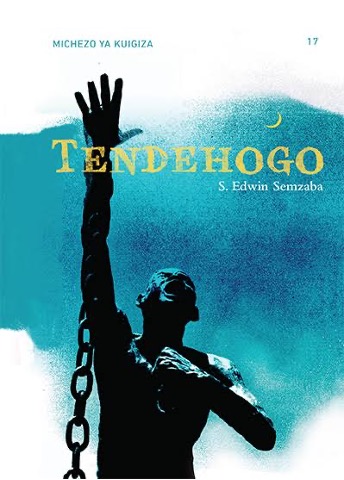
The first example, Semzaba’s play Tendehogo, recounts the experiences of a group of African slave captives during the early nineteenth century as they are being forcibly driven away from their homeland in the interior of Tanzania to slave markets on the shores of the Indian Ocean. On the way, their captor, an Arab slave trader who is equipped with stick and riffles, decides to teach them a song about the goodness of Arab land (Arabia) and Arab civilization. He forces them to sing it repeatedly in order to occupy them and hence prevent them from thinking, conversing, or possibly planning to escape. He also hopes that the act of singing the song repeatedly would brainwash them and make them willingly desire to go to Arabia. At one point, the slave captives disobey him and begin to sing their own song about their memories of their homeland, relatives and freedom that they were forced to leave behind. The singing of this counter-enslavement song catalyzes their efforts to free themselves (recording: https://samap.ukzn.ac.za/kikolomo). The play ends with the slave captives succeeding to kill their captor and set themselves free from the yokes of enslavement.9
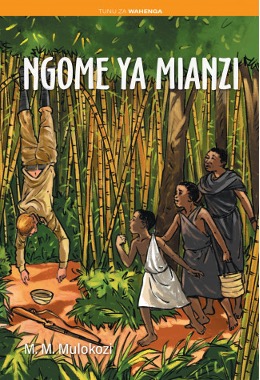
My second example, Mulokozi’s novel Ngome ya Mianzi, describes the interesting ways in which the Hehe people of the present-day Iringa region use drum sounds to communicate war messages. It is set at the end of the nineteenth century when the German Empire began to invade the Hehe kingdom in order to colonize it. Specifically, the novel narrates the first military encounter between the Hehe soldiers and the German colonial troops in 1891. It depicts members of the Hehe community using specific drum patterns to circulate information about the presence of German colonial troops in their land and to organize a military ambush to resist the German invasion and colonization of their land. To the extent that their enemy cannot decipher the drum language, the Hehe soldiers succeed in ambushing, fighting, and defeating the invading German troops. The novel ends with the members of the Hehe kingdom celebrating the victory and mourning the loss of their heroes through singing, drumming and dancing.10 Here is an example of a Hehe mourning song (https://samap.ukzn.ac.za/ngwidika-sadanga-wapamagulu) and a Hehe celebratory song (https://samap.ukzn.ac.za/kuulaya-mtwayungi-mganga-gwilyawawina-b).
In both examples, the fictional accounts of the use of musical sounds corroborate written and oral historical narratives of these events. In other words, although the plots and characters in these texts are fictional, the texts refer to actual musical and sound practices among the communities represented in the texts. For this reason, the Swahili literary texts serve as supplementary and complementary sources of information on the various uses of musical sounds in East African societies. A question may be asked: why should we turn to fictional texts when the historical information we want can be obtained from other, arguably more reliable, historical sources? Put differently, what is the added value of literary accounts as historical sources? The second thesis addresses this question.
Thesis 2: Representing Musical Sounds and Tanzanian Social Worlds from the Inside
The Swahili literary texts not only give us information about historical realities and how musical sounds have been or are being used in the “real” world, but they also imaginatively describe people’s subjective lived experiences and the contexts in which these sounds have been or are being used and experienced. In the words of South African literary critic Stephen Clingman, these literary texts offer their readers a “history from the inside.”11 With reference to the work of South African novelist Nadine Gordimer, Clingman argues that a work of fiction “deals with an area of activity usually inaccessible to the sciences of greater externality” as it registers and expresses people’s inner experiences of historical realities.12 In the case of Semzaba’s Tendehogo, for example, the play provides detailed description of the humiliations to which the slave captives are subjected during the long walk to the slave market. It describes their agony as they are brutally beaten up by their Arab slave captor. It describes the bitter taste of the cassava food they are forced to eat during the walk, imaginatively using it as a figural representation of all the bitter experiences they are subjected to. The play also describes how the slave captives remember the sweet kind of cassava they used to eat in their homeland, and the sweet taste of their home cassava is used to figuratively evoke and represent their memories of the good life they enjoyed at home as free people. It is through these descriptions of various subjective experiences and feelings of the slave captives that the play enables its readers (or its audiences during live performances) to grasp the significance of the liberation song. These descriptions of the subjective experiences of slave captives justify their collective and tactful act of revolt which is catalyzed by the singing of the liberation song.
That said, we should be vigilant about the possible instrumentalization of literary texts by regarding them to be useful for broadening musicological horizons only when they serve the above-mentioned functions—namely, offering insights into the past and present musical and sound practices of a given society and describing people’s subjective lived experiences of the sounds, or providing readers with the histories of the sounds from the inside. We should be doubly vigilant about the possible undermining of the relevance of literary texts for musicological reflections when the musical or sound practices they represent do not reflect, represent, mirror, or correspond to the musical and sound practices of ordinary life outside the fictional worlds of the texts. In other words, we should be cautious of the notion that literary texts matter for musicological reflections only insofar as their descriptions of musical sounds and practices reflect or represent those in the “real” world outside the imaginary worlds that the literary narratives or poetic figurations themselves create. To demonstrate this vigilance, I present a third, arguably more provocative thesis.
Thesis 3: Creating Imaginary Musical Sounds and Social Worlds
Musical and sound practices in the imaginary worlds of literary texts are important for broadening the horizons of musicology irrespective of whether or not they correspond to, reflect, and/or represent the musical and sound realities in the external or ordinary world. As readers of literary texts and attentive observers of the musical sounds that we encounter in the imaginary or fictional worlds of the literary texts, we become curious and develop a desire to understand how these musical sounds are related to other aspects of human life and social relations in these imaginary worlds in the same way as “traditional” ethnomusicologists or cultural musicologists do with the musical sounds they encounter in the “ordinary” human worlds and societies. Like historical or even comparative musicologists, we become curious and seek to understand the differences and similarities between two or more musical worlds in different literary texts, in texts written during two or more historical periods, or in texts whose musical worlds are set in different historical periods or geographical locations. In short, knowing the musical or sound practices in the texts, knowing their histories and how they relate to the fictional social relations in the worlds of the texts themselves is an important endeavor in itself, whether or not these musical sound practices and histories are related to the external world of flesh and blood.
In conclusion, the literary turn of musicology invites musicologists to be more curious and more aware of the significance of literary texts in illuminating the role of musical sounds in people’s social lives in societies from different historical periods and from different geographical locations as well as in the imaginary societies that the literary texts themselves create. It also calls from the multiplicity of approaches and a combination of different epistemological lenses and sonic sensibilities in our efforts towards the broadening of musicological horizons.

References
- Dipesh Chakrabarty, Provincializing Europe: Postcolonial Thought and Historical Difference (Princeton, NJ: Princeton University Press, 2000).
- Ngugi wa Thiong’o, “Moving the Centre: Towards a Pluralism of Cultures,” in Philosophy from Africa: A Text With Readings, 2nd ed., ed. P. H. Coetzee and A. P. J. Roux (Cape Town: Oxford University Press, 2002), 55.
- Maureen Barry McCann Boulton, The Song in the Story: Lyric Insertions in French Narrative Fiction, 1200–1400 (Philadelphia: University of Pennsylvania Press, 1993).
- Jean-Jacques Nattiez, Proust As Musician (Cambridge: Cambridge University Press, 1989); Peter Dayan, Music Writing Literature, from Sand via Debussy to Derrida (London: Routledge, 2006).
- Delia da Sousa Correa, Phrase and Subject: Studies in Music and Literature (London: Routledge, 2020); Gillian Dooley, She Played and Sang: Jane Austen and Music (Manchester: Manchester University Press, 2024).
- Harry White, Music and the Irish Literary Imagination (Oxford: Oxford University Press, 2008); Joyces Noyces and Gerry Smyth, Music and Sound in the Life and Literature of James Joyce (Cham: Palgrave Macmillan, 2020).
- Bart Eeckhout and Lisa Goldfarb, The Poetic Music of Wallace Stevens (Cham: Palgrave Macmillan, 2022).
- Julie Huntington, Sounding Off: Rhythm, Music and Identity in West African and Caribbean Francophone Novels (Philadelphia, PA: Temple University Press, 2009); Aldin Mutembei, Korasi katika Fasihi: Nadharia Mpya ya Uhakiki (Dar es Salaam: TUKI, 2012); Pim Higginson, Scoring Race: Jazz, Fiction and Francophone Africa (Rochester, NY: James Currey, 2017).
- Edwin Semzaba, Tendehogo (Dar es Salaam: Tanzania Publishing House, 1980; new ed., Dar es Salaam: Mkuki na Nyota, 2019); Imani Sanga, “Musical Figures of Enslavement and Resistance in Semzaba’s Kiswahili Play Tendehogo,” African Studies 79, no. 3 (2020): 323–38.
- Mugyabuso M. Mulokozi, Ngome ya Mianzi (Dar es Salaam: KAUTTU, 2014; new ed., Dar es Salaam: APE Network, 2023); Imani Sanga, “Sonic Figures of Heroism and the 1891 Hehe-German War in Mulokozi’s Novel Ngome ya Mianzi,” Journal of Postcolonial Writing 55, no. 5 (2019): 698–709.
- Stephen Clingman, The Novels of Nadine Gordimer: History from the inside (Amherst: University of Massachusetts Press, 1986), 1.
- Ibid.